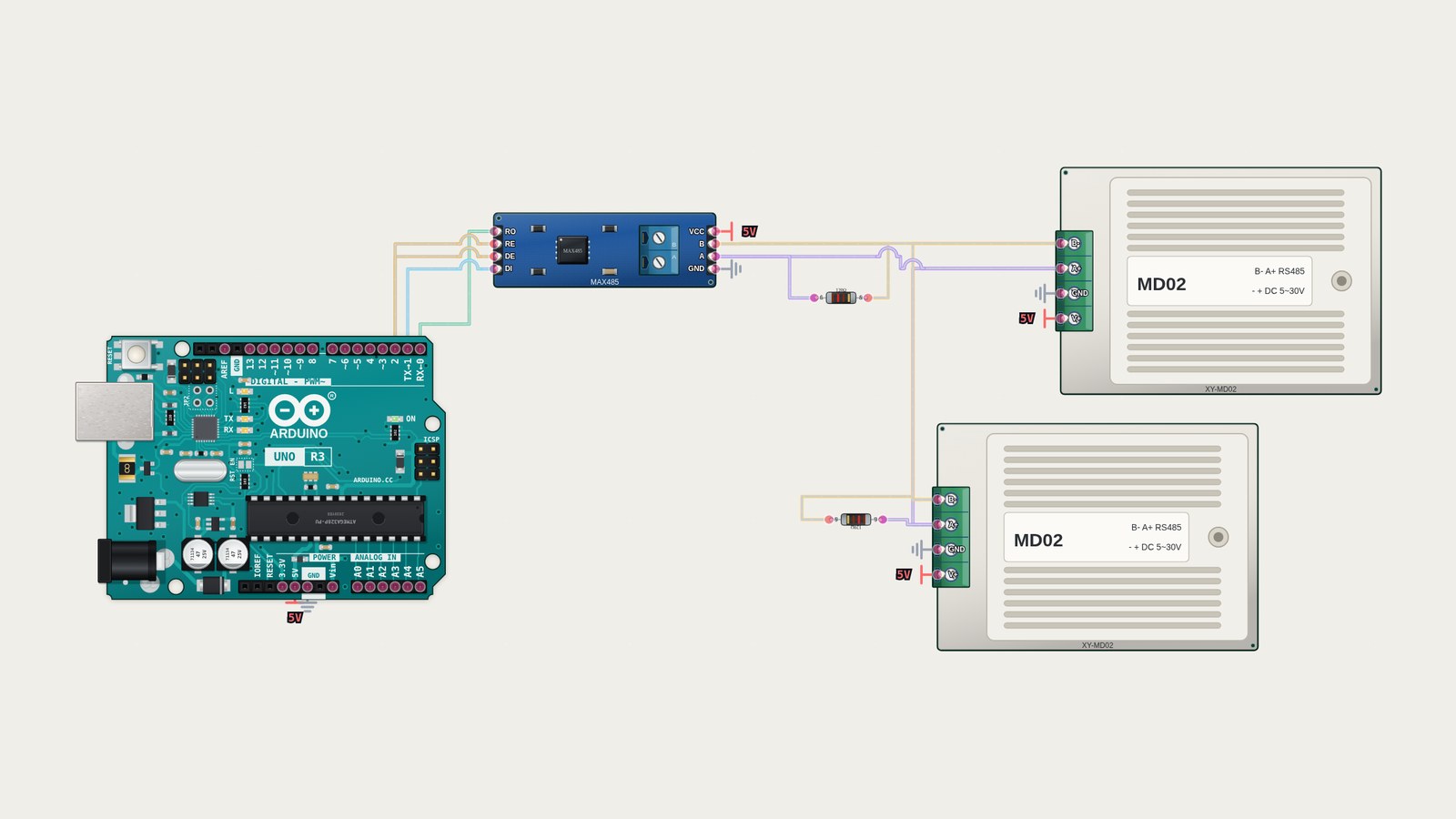
Modbus RTU without a bus analyzer
An Arduino Uno, a MAX485 and two XY-MD02 Modbus RTU temperature and humidity sensors on one RS-485 pair, simulated in the browser and in CI. The frames on the wire are checked by pymodbus.
Oct 5, 2026
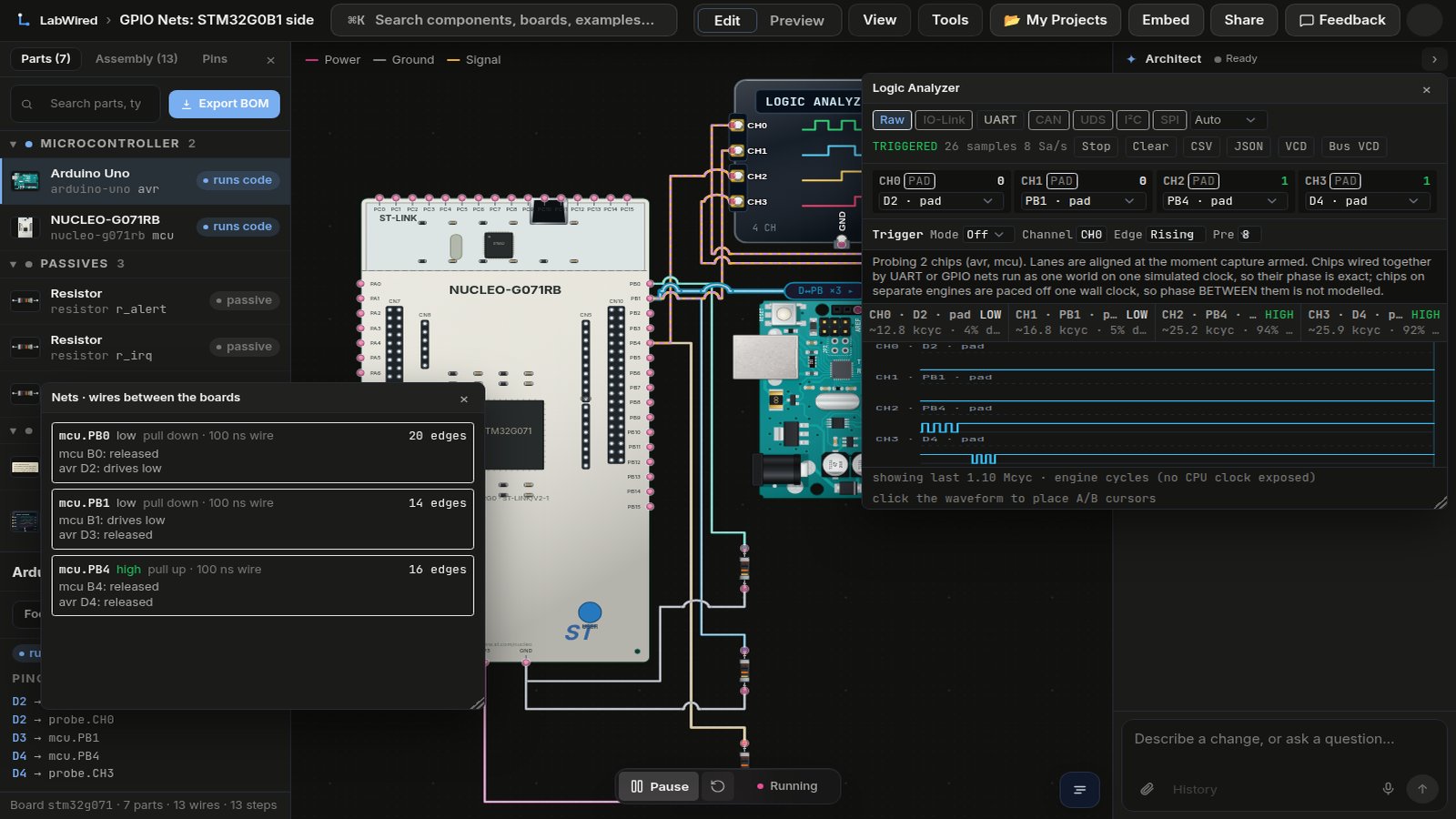
Two boards, one wire: GPIO nets between MCUs
An STM32G0B1 and an Arduino Uno connected by an interrupt line, a ready line and a shared open-drain alert line, each running its own firmware in one simulation, in the browser and in CI.
Oct 5, 2026
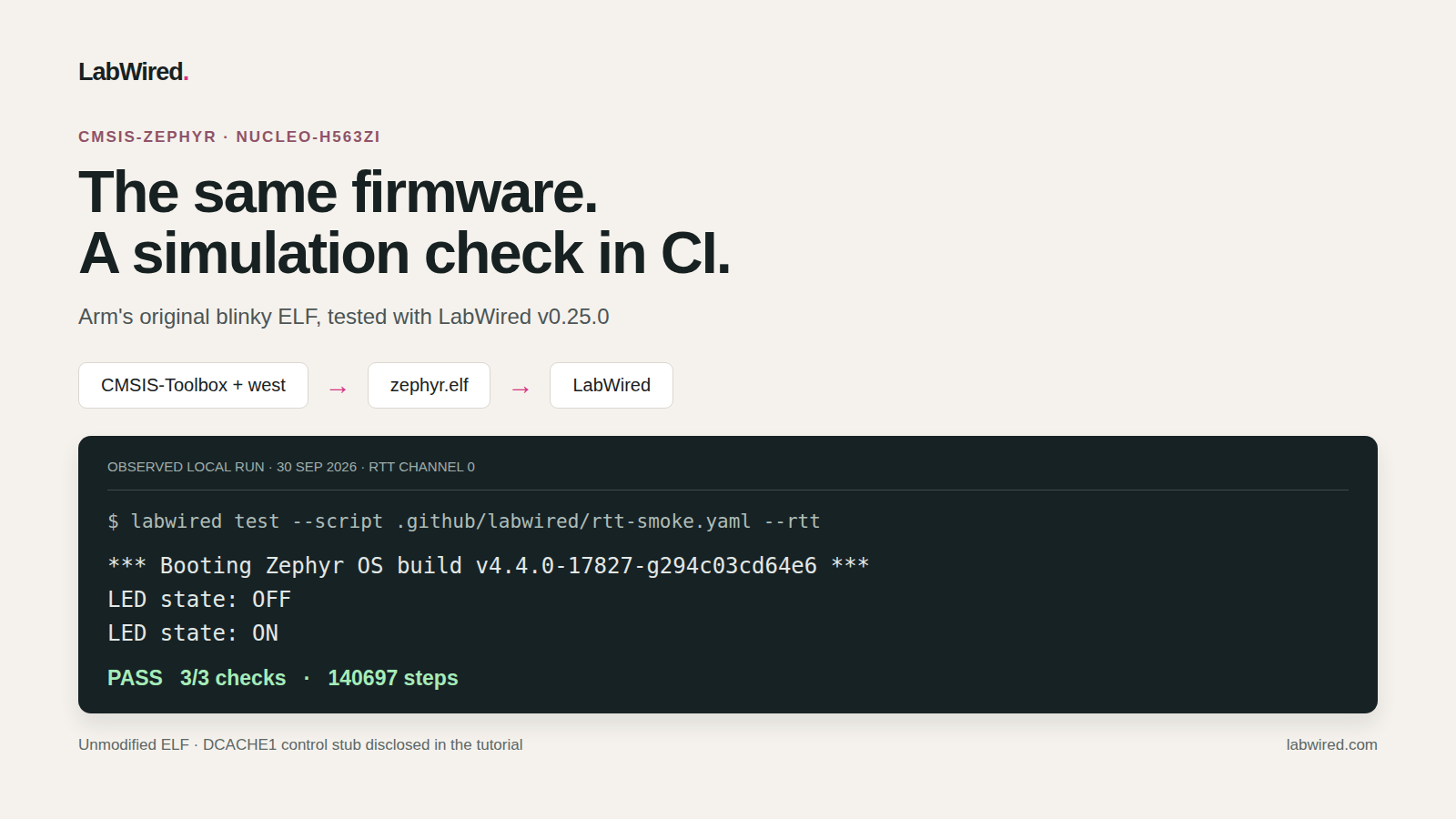
Run Arm's CMSIS-Zephyr CI example in LabWired
Keep the CMSIS-Toolbox build. Run the same NUCLEO-H563ZI ELF in LabWired, assert RTT output, and save test results in GitHub Actions.
Sep 30, 2026
One binary, two measurements: MemBrowse and LabWired
MemBrowse reads the bytes that the linker placed. LabWired runs the same binary. LabWired measures the stack. On an nRF54L15 test, the two values add to 152 bytes. On an ESP32-C3, the report leaves the stack blank.
Sep 22, 2026
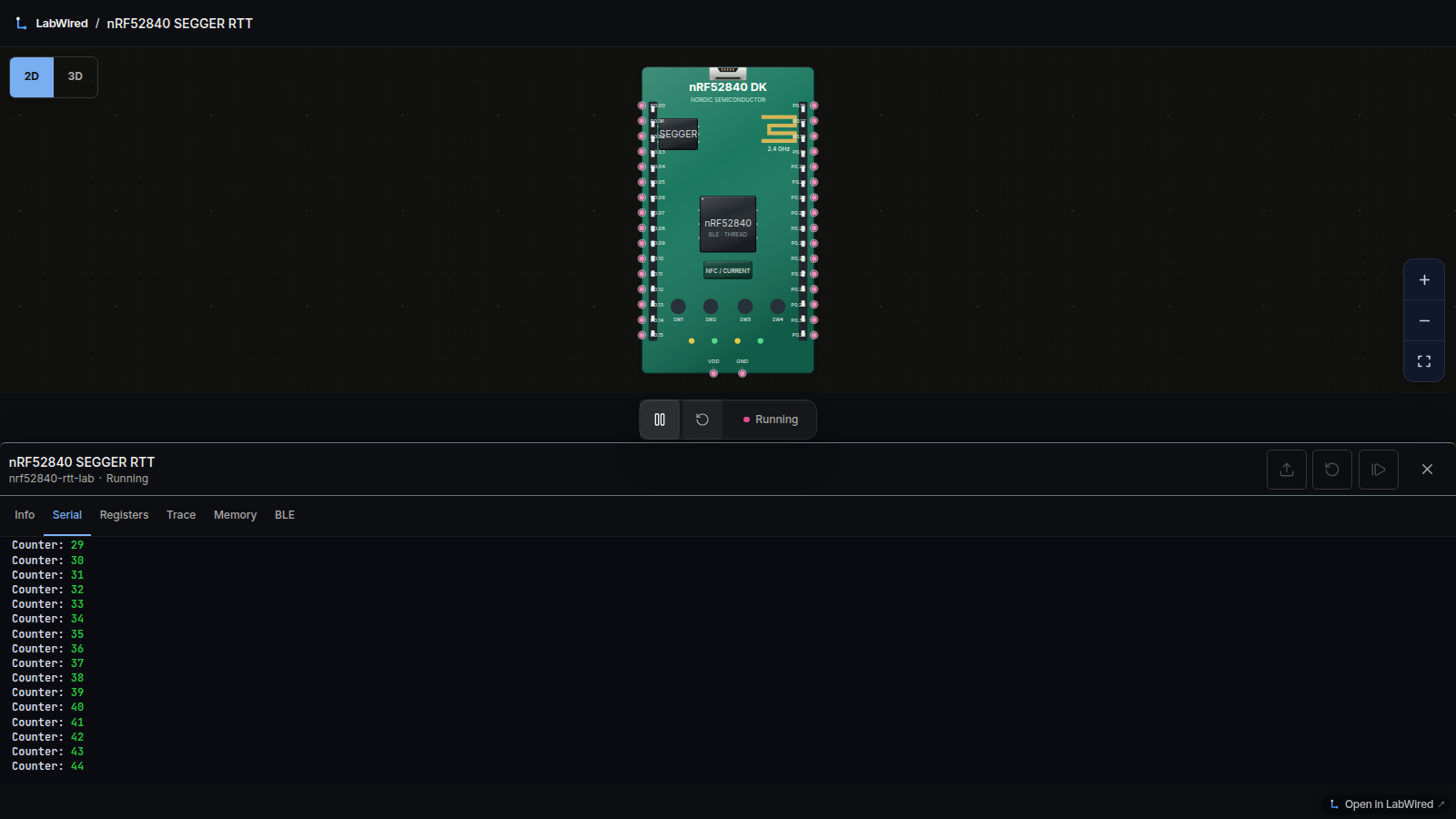
SEGGER RTT without a J-Link
Run the SEGGER RTT example in the LabWired browser. LabWired reads the control block in RAM. The log text shows in the Serial pane.
Sep 21, 2026
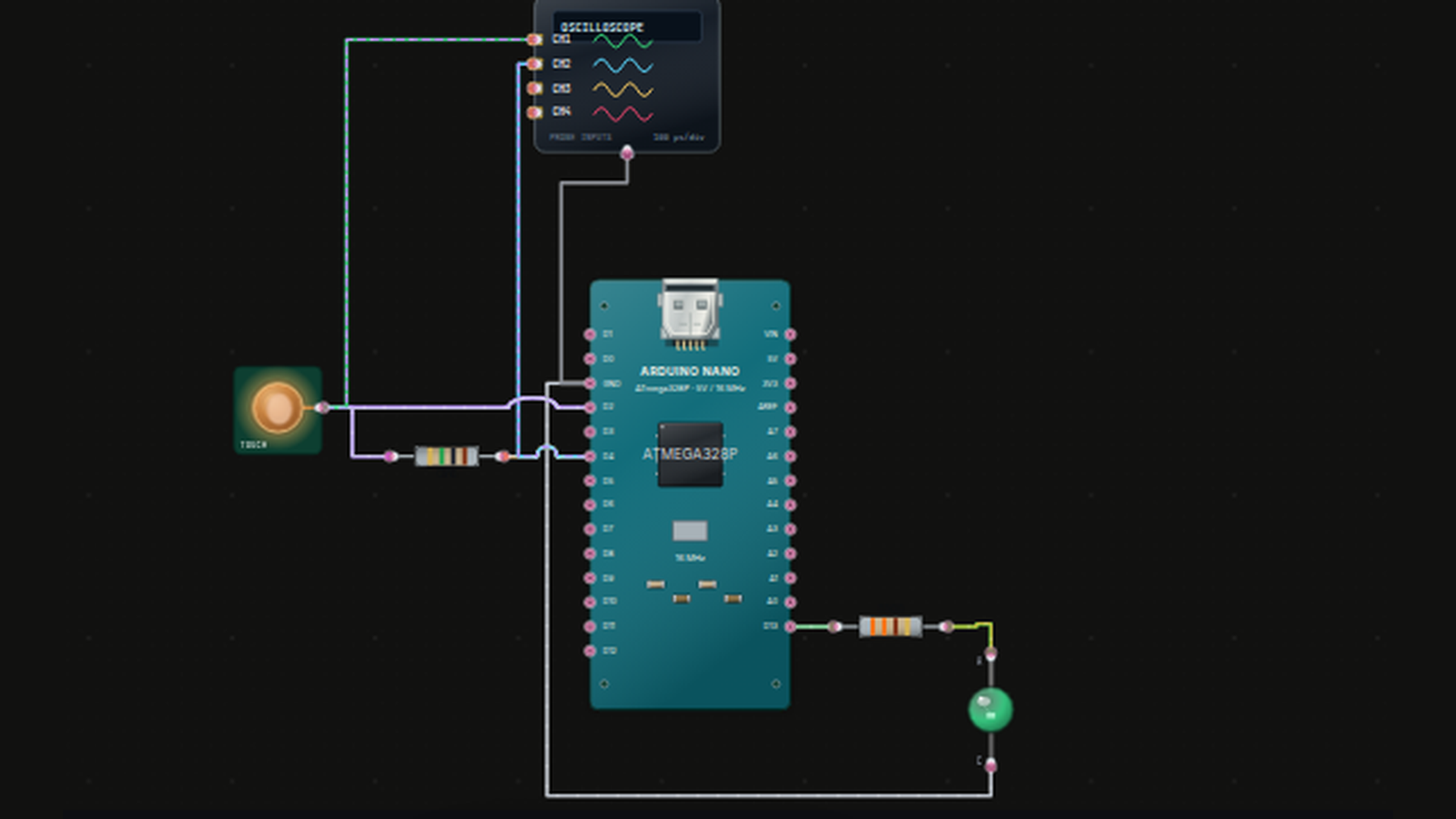
A capacitive touch sensor you can run in your browser
Run Arduino CapacitiveSensor firmware against a simulated touch circuit. Hold the touch pad. Inspect the charge curve. Change the LED threshold.
Sep 14, 2026
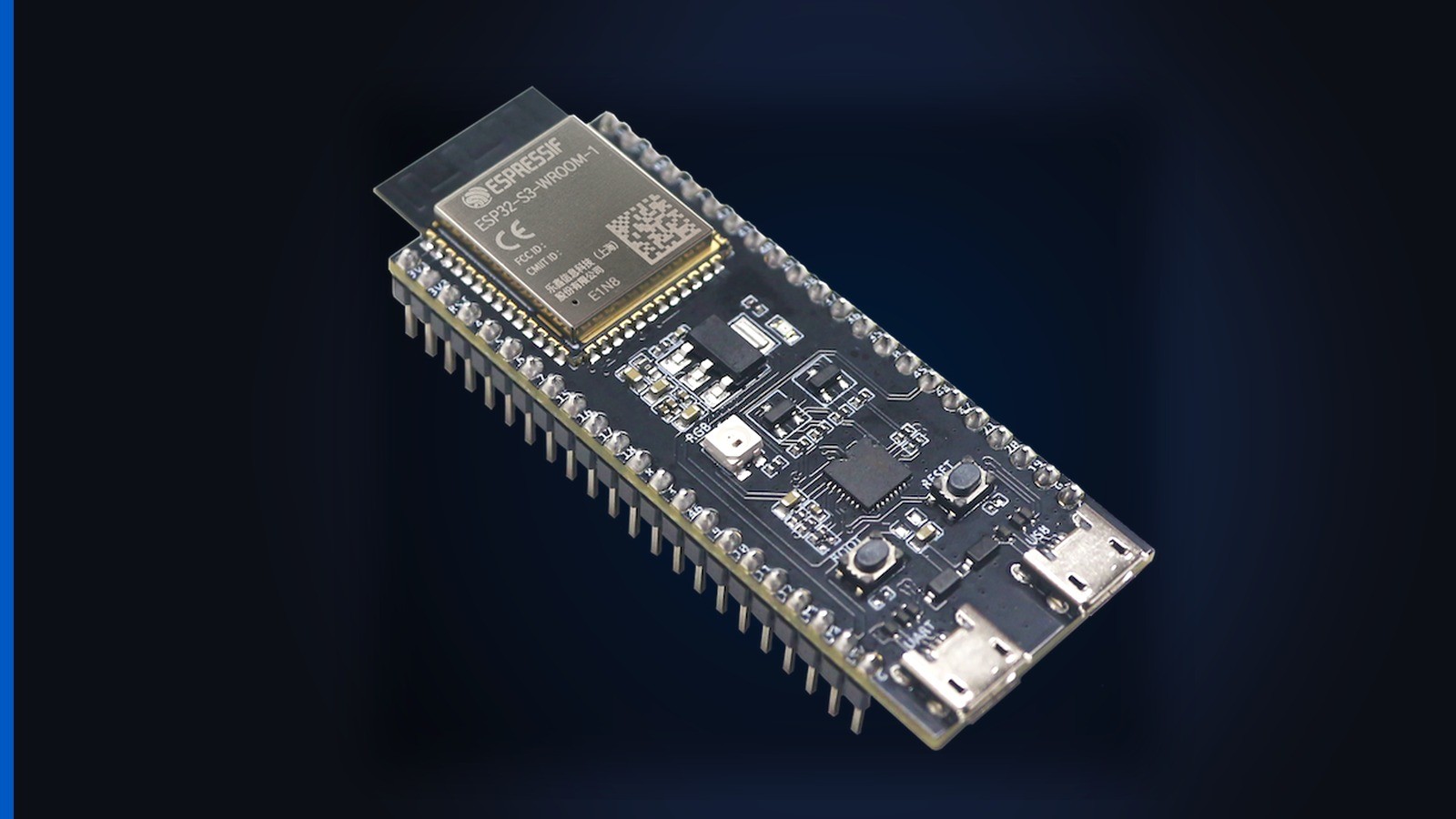
Blink, a button, and Wi-Fi on the ESP32-S3
The board is the ESP32-S3-DevKitC-1 N16R8. The LED is on GPIO4. The button is on GPIO5. The sketch calls WiFi.begin to join labwired-ap. The sketch sends GET /status. Use the same Arduino sketches. Each step runs on this page.
Aug 20, 2026

Build a complete OBD-II scanner without a car and without hardware
Build a two-MCU nRF52840 OBD-II scanner. Verify the scanner. The scanner uses MCP2515 CAN, an SSD1306 display, BLE telemetry, and a deterministic virtual vehicle ECU.
Aug 9, 2026

CRA secure-boot evidence in CI
Use LabWired to produce CRA-style secure-boot evidence. Run real firmware on a virtual board in CI. Assert boot, OTA, and anti-rollback. Download a signed pack after each successful run.
Aug 7, 2026

Simulate a cellular modem and MQTT without a full network
LabWired models Quectel AT MQTT (QMT*) and GNSS. Firmware can send location messages. You can collect the messages in the lab. The lab does not use a radio, a SIM, or a broker.
Aug 6, 2026

Part knowledge gives firmware agents the datasheet
Agents answer hardware questions from recall. The agents get addresses wrong. LabWired serves part knowledge over MCP.
Aug 3, 2026

Why your AI agent needs auditable virtual hardware
Agents write firmware. Agents still cannot prove that the firmware runs. Agents need virtual, auditable hardware. The hardware is open-source LabWired boards under MCP. The same oracle is in the Playground. The same oracle is in CI.
Jul 30, 2026

Run a full IO-Link master with no hardware
A real IO-Link master stack and real device stacks exchange data on the C/Q wire. The full exchange runs in software in your browser and in CI. The stacks are not mocks.
Jul 1, 2026

Render your Arduino e-paper firmware. You do not need the hardware.
You build real Arduino-ESP32 GxEPD2 e-paper firmware with PlatformIO. You run the same ELF in the LabWired simulator. The simulator paints a simulated panel exactly as the real panel does.
Jun 20, 2026

Run a full ECU diagnostic check with no hardware
Run a full 27-service ECU UDS check across two virtual STM32H5s. The check uses a simulated CAN bus. The check runs headless, in CI, with no hardware.
Jun 15, 2026

The closed loop. Agents build firmware in PlatformIO. Agents verify the firmware in a simulator.
A feedback loop lets an AI agent build embedded firmware. The loop lets the agent verify the firmware. The loop uses no hardware.
Jun 1, 2026

Run your PlatformIO unit tests with no hardware. You install nothing.
Run pio test in the LabWired deterministic simulator. Keep the standard Unity workflow. Use no hardware.
May 15, 2026

LabWired finds a CAN bug that occurs only on real hardware
A multi-frame UDS (ISO-TP) bug occurred only on real STM32F103 hardware. The cause was an N_Cr clock-source mismatch. LabWired reproduced the bug. LabWired debugged the bug. LabWired fixed the bug. The work did not touch the silicon.
May 1, 2026

Why embedded tests flake and how you stop the flakes
Priority inversion, race conditions, and clock drift make firmware CI flake. Deterministic simulation stops these flakes.
Apr 1, 2026